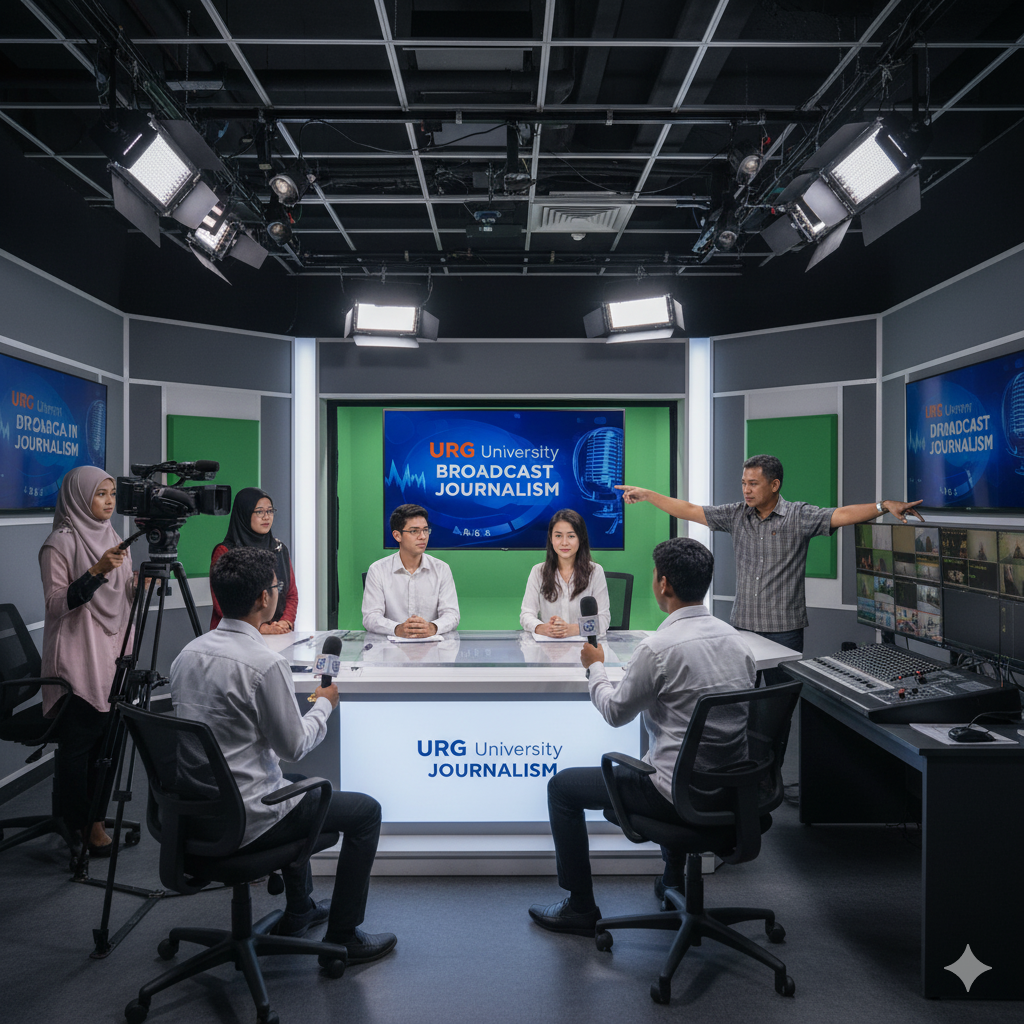

Diploma Broadcast Journalism – Level 3
The KDM Global EDU Online programme in collaboration with Universiti Geomatika Malaysia provides professional training in the field of broadcasting and journalism. Students will develop competencies in reporting, news presenting, news writing, media production, and content analysis as preparation for careers within the modern media industry.
Apply Now
Why Choose This Programme?
The Diploma Broadcast Journalism Level 3 programme is designed to equip students with practical and professional skills in broadcasting, presenting, news writing, and media production. Delivered by experienced academic staff in collaboration with KDM Global EDU Online and Universiti Geomatika Malaysia, this programme provides a strong foundation for students to enter the media and broadcasting industry professionally.

Broadcasting & Communication Skills
Students are trained to deliver news, host programmes, and communicate confidently and ethically in front of the camera.

Media Production & Editing
Master the fundamentals of recording, video editing, and content management for television broadcasts, radio, and digital platforms.

News Analysis & Journalism
Students learn news research, journalistic ethics, and report writing for print and digital media.

Experienced Academic Staff
Taught by lecturers and media industry practitioners with professional experience from Universiti Geomatika Malaysia.
Core Modules Diploma Broadcast Journalism
These modules are designed to build a strong foundation in modern journalism, television broadcasting, digital media, and professional communication skills required within the news and content production industry.
Journalism Fundamentals
An introduction to news writing, journalistic ethics, and principles of accurate and responsible information delivery.
Video Production & Broadcasting
Learning camera techniques, visual recording, lighting, and basic production for television programmes and digital broadcasts.
News Presentation
Training in news presenting, voice control, diction, and professional on-camera delivery techniques.

Digital Media & Mobile Journalism
News coverage techniques using mobile devices, social media reporting, and digital content creation strategies.

Documentary Production
Students produce documentaries from research, filming, through to post-production processes.

Media Management & Industrial Training
Exposure to newsroom operations, media law, and practical experience through industrial training.

Career Prospects & Your Opportunities
Complete the Diploma Broadcast Journalism and build a career in the world of media, broadcasting, news, and digital content. The curriculum is structured to support students in entering the industry directly or progressing to Degree-level studies.
News Presenter / TV Journalist
Opportunities to work as a news presenter, broadcast journalist, or reporter for television and digital media platforms.
Camera Operator & Programme Producer
Involved in the production of television programmes, documentaries, and news content using professional production skills.
Content Creator & Digital Journalist
Build a career as a digital journalist, content creator, or social media reporter across various platforms.

Progress to Degree-Level Studies
Graduates may continue their studies at Degree level in Media, Broadcasting, Mass Communication, or Journalism.
Entry Requirements & Eligibility
The Diploma Broadcast Journalism programme is open to school leavers, working individuals, and anyone interested in building a professional foundation in broadcasting, media, and journalism. The entry requirements are designed to allow learning to be undertaken progressively with a strong focus on industry-relevant skills.
School Students / SPM Leavers
Minimum pass in SPM or equivalent. Suitable for students interested in broadcasting, media, journalism, and content production.
Working Adults / Professionals
Open to working individuals who wish to enhance their skills in media, broadcasting, video production, and digital content at a professional level.

Supporting Documents
Copies of Identity Card, SPM transcript or equivalent, as well as a portfolio related to video, articles, audio, or digital media projects (if available).
Schedule & Programme Duration
The learning structure of the Diploma Broadcast Journalism is designed with flexibility to support both full-time students and working individuals. The programme duration and schedule allow students to progress through their studies in stages without compromising the quality of theoretical and practical training.

Standard Duration
The study duration ranges between 12 to 24 months, depending on learning pace and module sequencing. Suitable for full-time students or working individuals within the broadcasting and media fields.

Class Schedule
Classes are conducted online and through studio-based practical sessions. Schedules are arranged flexibly according to media modules, broadcasting components, and project requirements undertaken by students.

Learning Format
A combination of academic theory, studio practical training, and media projects. Emphasis is placed on broadcasting skills, digital content production, and professional communication.
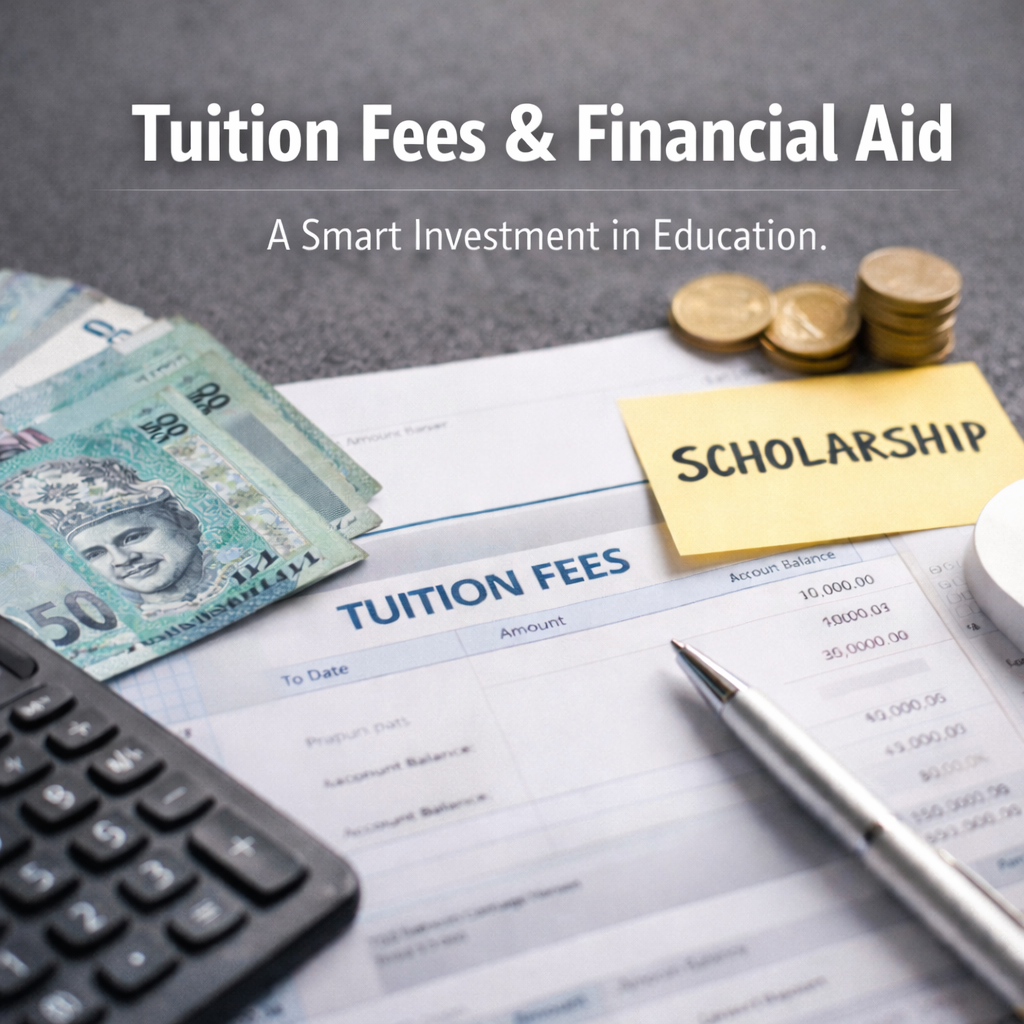
Fees & Financial Assistance
The Diploma Broadcast Journalism programme is offered with a reasonable fee structure and various financial assistance options to support students in planning their education funding. This financial support aims to ensure that students are able to focus on learning, practical training, and the development of professional skills in the media and broadcasting field.

Instalment Facilities
Students may make fee payments through structured instalment plans to facilitate financial planning without affecting participation in media projects and studio-based training.

PTPTN Assistance
Eligible students may apply for PTPTN funding to cover tuition fees as well as costs related to learning activities and practical projects throughout the programme.

Sponsorship & Special Support
Selected students may be considered for sponsorships or special financial support through collaborations between KDM Global EDU Online and media industry partners, subject to eligibility criteria and stipulated terms.
Frequently Asked Questions (FAQ)
This section compiles several frequently asked questions related to the Diploma Broadcast Journalism programme to help students understand the study structure, learning methods, and post-graduation pathways.
Who is suitable to join this programme?
This programme is suitable for SPM leavers, professionals, or individuals interested in building a career in broadcasting, journalism, digital media, and content production, either as a starting point or to enhance existing skills.
Is this course conducted online or physically?
The programme is delivered online through KDM Global EDU Online, supported by assignments, practical projects, and studio training supervised by experienced instructors in the media and broadcasting field.
How long is the programme duration?
The duration of study is flexible, typically between 12 to 24 months, depending on learning planning and the number of modules undertaken by the student.
What are the career opportunities after graduation?
Graduates may work as broadcast journalists, radio or television presenters, media editors, digital content producers, or continue their studies to a higher level in related fields.